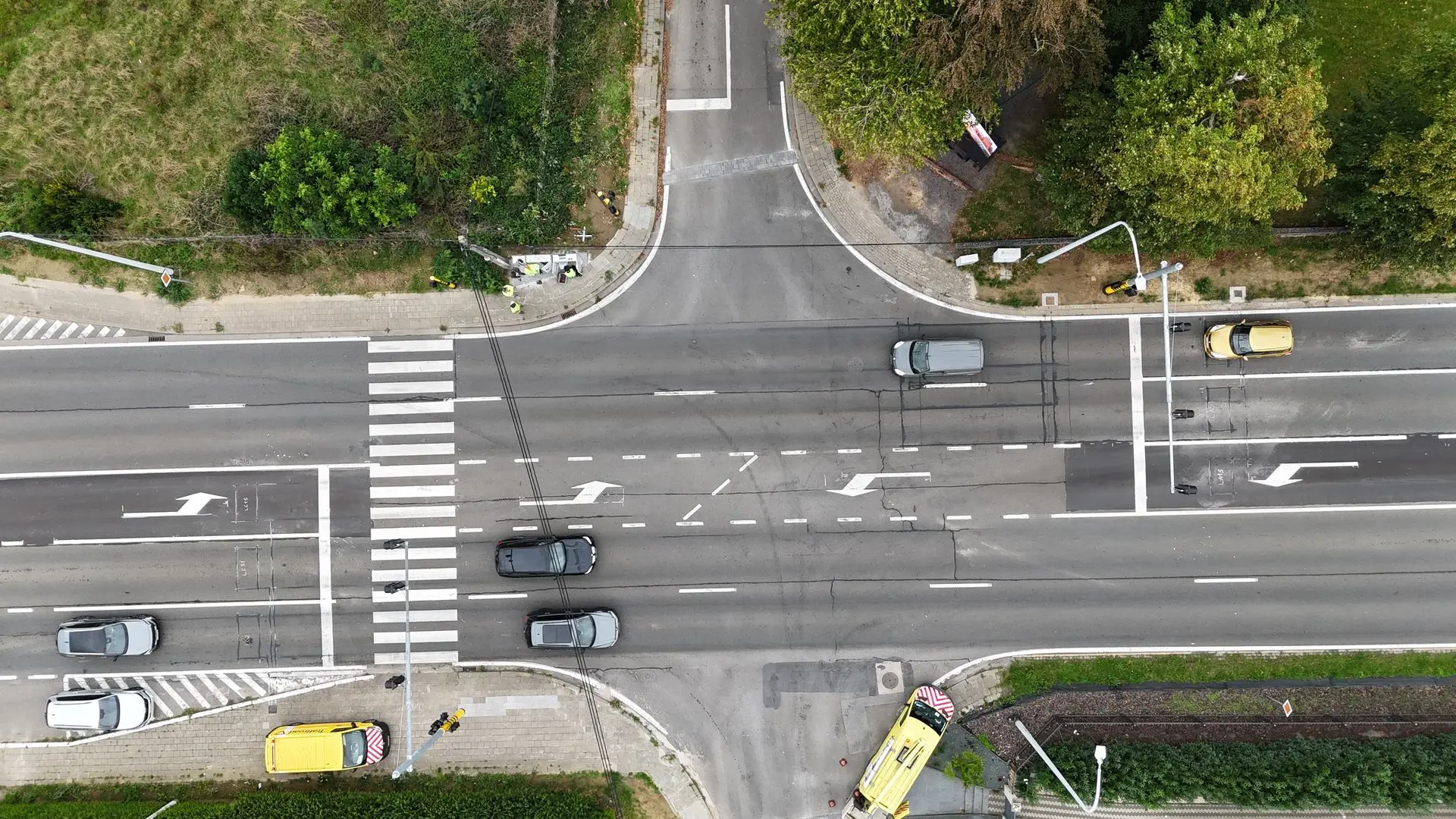
Traffic signals need reliable information about who is approaching and waiting at an intersection. Road authorities also need detailed data to understand traffic flows and plan improvements. In Lennik, Belgium, Agentschap Wegen en Verkeer (AWV) and Flow Analytics by AGC have launched a project to validate how one LiDAR-based system can support both needs.
The project brings together four partners with complementary expertise. AWV defined the ambition and made its infrastructure available, while Flow Analytics by AGC supplied the LiDAR sensing and analytics. Trafiroad NV carried out the on-site installation, and SWARCO ITS integrated the solution with its FlowNode system, allowing actuation data to flow directly into the monitoring tool AWV already uses.
Detecting demand at the intersection
The solution is designed to detect vehicles, pedestrians and cyclists through a single system, reducing the need for separate detection equipment for each type of road user. It supplies actuation data to support traffic signal responses within the intersection’s configured control rules.
The project also aims to validate automated pedestrian actuation as an alternative to push buttons. Detecting pedestrians waiting to cross could allow the system to register crossing demand without requiring them to press a button.
Using the same data for traffic analysis
Alongside actuation, the LiDAR-based system supports detailed traffic surveys. Data on movements through the intersection can help AWV understand how different road users share the space and assess how the intersection performs.
Combining these functions in one installation offers road authorities a way to connect day-to-day traffic management with longer-term analysis. The Lennik project will help evaluate this approach in real operating conditions and explore how existing intersection infrastructure can support both functions.