Régulation intelligente des feux de circulation, sans travaux routiers
Détectez, classifiez et pilotez le timing des feux à partir d’un seul capteur installé sur un poteau existant
L’activation des feux de circulation (également appelée commande à la demande, régulation adaptative des feux ou gestion dynamique des feux) consiste à ajuster leur temporisation en fonction de la détection en temps réel des véhicules, cyclistes et piétons, plutôt que de suivre un cycle fixe. Un capteur indique au contrôleur qui attend, où et en quelle quantité. Le contrôleur détermine ensuite combien de temps maintenir ou prolonger une phase.
Les limites des technologies de détection traditionnelles
Les villes souhaitant mettre en place une activation des feux de circulation choisissent traditionnellement entre quatre solutions, chacune présentant ses propres compromis :
Les boucles virtuelles basées sur le LiDAR de Flow Analytics by AGC couvrent l’ensemble de ces besoins avec un seul capteur : présence, classification et mouvement, à partir d’une seule lecture 3D de l’intersection.
Boucles virtuelles : une détection flexible qui va au-delà de l’activation des feux
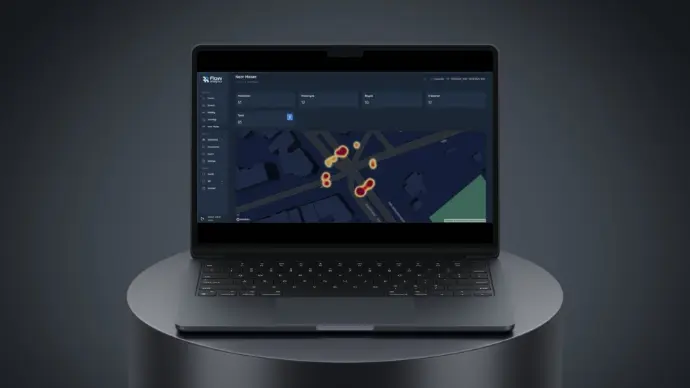
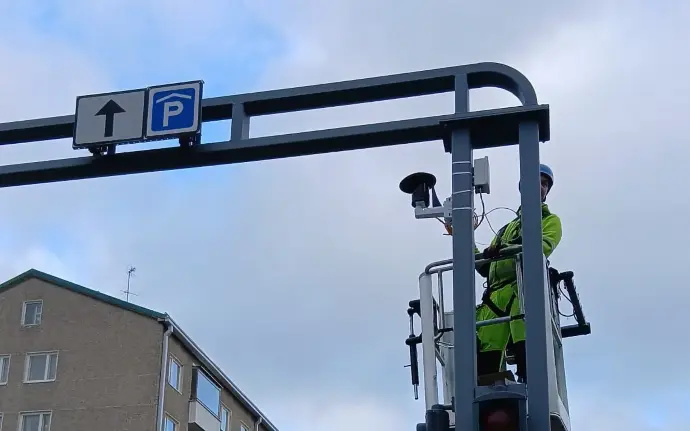
Flow Analytics by AGC installe des capteurs LiDAR sur les poteaux de feux de circulation existants. Aucun découpage de la chaussée ni câble enterré n’est nécessaire. Le capteur génère en temps réel un nuage de points 3D de l’intersection, sur lequel les zones de détection sont définies par logiciel : leur nombre est illimité et elles peuvent être redimensionnées ou déplacées en quelques minutes depuis un navigateur, sans intervention sur site.
Une boucle physique ne répond qu’à une seule question : y a-t-il quelque chose ici ? Une boucle virtuelle fournit beaucoup plus d’informations. Le même nuage de points utilisé pour piloter les feux fournit également la vitesse, la direction, la classe d’objet, les trajectoires et les données sur les quasi-accidents. Une seule installation couvre ainsi à la fois l’activation des feux de circulation et l’analyse des mouvements utilisée pour ajuster les plans de feux, évaluer la sécurité et soutenir la planification.
Comparées aux boucles inductives physiques, les boucles virtuelles ont détecté 99,83 % des événements relevés par les boucles inductives. Les données peuvent être transmises au contrôleur via des entrées de détection standard ou des protocoles ITS modernes, aussi bien sur des contrôleurs existants que de nouvelle génération.
Comment ça marche : détecter, comprendre, agir
Boucles virtuelles vs autres technologies de détection
De la détection à la prise de décision
L’activation des feux de circulation est l’utilisation la plus immédiate de ces données, mais le même déploiement de capteurs permet aussi de produire les analyses sur lesquelles les villes s’appuient réellement pour planifier la mobilité :
- Ajuster les plans de feux à partir des mouvements tournants mesurés et du comportement réel des files d’attente, plutôt que de s’appuyer sur des comptages ponctuels supposés rester représentatifs.
- Identifier les quasi-accidents et les schémas de conflit avant qu’ils ne se transforment en statistiques d’accidents, afin de soutenir les programmes Vision Zero avec des données concrètes plutôt qu’avec des rapports établis après les collisions.
- Réaliser des comparaisons avant/après lorsqu’un aménagement de l’intersection est modifié ou qu’un nouveau plan de feux est mis en place.
- Intégrer les données origine-destination et les comptages multimodaux dans une planification plus large de la mobilité, sans nécessiter le déploiement d’un second capteur.
Mise en œuvre récente de l’activation des feux de circulation
Flow Analytics a déployé des boucles virtuelles basées sur le LiDAR à Jyväskylä, en Finlande, comme alternative directe aux boucles inductives, permettant de piloter les feux sans travaux dans la chaussée. Le déploiement a démontré une précision de détection au niveau de la ligne d’arrêt comparable à celle des boucles physiques, tout en fournissant des données de mouvement que l’ancien système ne pouvait pas produire.
Questions fréquentes
Aucun nouveau matériel n’est nécessaire. Les zones de détection étant définies par logiciel, elles peuvent être redessinées à partir du capteur existant, sans intervention sur site.
En général, un ou deux capteurs par intersection suffisent, selon sa géométrie. Installés sur les poteaux existants, ils couvrent l’ensemble des voies d’approche ainsi que la zone centrale de l’intersection. Lorsque plusieurs capteurs sont déployés, leurs données sont fusionnées afin de créer une vue unique et cohérente de l’intersection, plutôt que de fonctionner comme des systèmes de détection indépendants.
Uniquement des points 3D anonymes : aucune image, aucun visage et aucune plaque d’immatriculation.
Oui. Les capteurs LiDAR émettent leur propre lumière et ne dépendent donc ni de la lumière ambiante ni d’un objectif de caméra. La précision de détection reste ainsi fiable dans l’obscurité, sous la pluie, dans le brouillard et sous la neige.
Il peut se connecter localement au contrôleur de feux de l’intersection ou transmettre les données de manière centralisée à votre centre de gestion du trafic pour la supervision et le pilotage de l’ensemble du réseau.
La solution est compatible avec les protocoles de communication standard des feux de circulation et des systèmes ITS. Elle s’intègre donc aux contrôleurs et réseaux existants sans nécessiter d’interface propriétaire.
Pourquoi choisir l’activation des feux de circulation de Flow Analytics by AGC ?

La protection de la vie privée d'abord
Notre solution ne capture jamais de visages, de plaques d'immatriculation ou de données personnelles. Elle s'appuie sur des points LiDAR 3D anonymes, ce qui la rend entièrement conforme au GDPR et sûre pour une utilisation publique.

Précis et détaillé
Les mouvements sont suivis au centimètre près, ce qui permet des comptages, des classifications et des analyses de trajectoire précis que les méthodes manuelles et les caméras ne peuvent égaler.

Éprouvé dans des conditions réelles
Conçu pour les environnements urbains complexes avec une circulation dense, un faible éclairage ou des conditions météorologiques difficiles, il garantit des résultats cohérents là où d'autres systèmes échouent.
Actionnable
Au lieu de fournir des données brutes nécessitant un traitement supplémentaire, nous fournissons des informations sous forme de tableaux de bord, de rapports et de formats SIG que les décideurs peuvent appliquer directement à la planification, à la conception et aux opérations.